Latest Movie :
Recent Movies
View As:
Showing posts with label bmovies. Show all posts

Why Has Bodhi-Dharma Left for the East? (Buddhist Movie)

A meditative film dealing with Seon Buddhist views on life, Why Has Bodhi-Dharma Left for the East? follows the lives of three Buddhist monks: a child, an adult, and an old man. This film is largely about two Zen koans. The koans are: What is my original face before my mother and father were conceived?, and (In death,) where does the master of my being go? The film’s title, although not explained literally in the film, is a reference to Bodhidharma, a 6th century Buddhist monk from India who transmitted Zen to China. The question, “Why has Bodhi-Dharma left for the east,” is echoed by the young boy’s question, “Why have we all left the world?” The entire film can be seen as as an answering of that question, so that the film itself becomes a koan.
Rate it :

พระพุทธเจ้า (Buddha) 2007 ไทย

เรื่องย่อ ย้อนหลังไปกว่า ๒๕๐๐ ปี เจ้าชายสิทธัตถะประสูติ ณ สวนลุมพินี โหรได้ทำนายว่าถ้าเจ้าชายไม่ได้เป็นกษัตริ­­­ย์ผู้ยิ่งใหญ่ ก็จะได้ตรัสรู้เป็นพระพุทธเจ้า พระเจ้าสุทโธทนะผู้เป็นบิดาจึงทำทุกวิถีทา­­­งเพื่อไม่ให้พระราชกุมารผันความสนพระทัย­ไ­ป­ออกผนวช แต่แล้ววันหนึ่งเจ้าชายก็ได้พบความจริงว่า­­­มนุษย์นั้นจะอย่างไรก็ไม่พ้นความทุกข์ เกิด แก่ เจ็บ ตาย จึงตัดสินใจช่วยมนุษย์ให้พ้นทุกขเวทนานี้ โดยหนีออกจากพระราชวังไปออกผนวช เจ้าชายสิทธัตถะต้องพบกับอุปสรรค ต้องทดลองทรมานตนหลายรูปแบบ ต้องพบกับมารที่มาผจญกว่าจะได้ตรัสรู้เป็น­­­สมเด็จพระสัมมาสัมพุทธเจ้า เพื่อพบกับภารกิจอันยิ่งใหญ่ ในการช่วยเหลือมนุษย์โลกให้พ้นทุกข์
Rate it :

Dr Babasaheb Ambedkar: The Untold Truth' [HD] Full Movie in English


[Full Movie in English] Dr. Babasaheb Ambedkar: The Untold Truth, by Jabbar Patel 
This is one of the finest historical film made in Independent India. The movie is a refreshing antidote to the way we have looked at INDIA in this century. A work of cinematic scholarship.
This film takes place between the years 1901 to 1956, a period of great social upheavals and revolutionary movements around the world. In India during this time, there were two struggles being fought simultaneously; the first, which is well known throughout the world, was India's fight for independence spearheaded by Mahatma Gandhi, against the British colonial powers.
The second struggle, much less well known but no less important was an internal struggle. Seventy million Indian untouchables, led by Dr. Ambedkar were fighting for their rights against upper caste Hindu society.
This film holds its significance due to the fact that, though the ethos contained is Indian, it has its equation in the political and social disparity all over the world. The basic aim of the social revolution is to uphold the meaning of humanity in its truest sense.
Born in an 'untouchable' family at a time when untouchables were forbidden education, Ambedkar bore many insults and humiliations at the hands of his fellow students and became the first graduate of his community. Later, while studying at Columbia University, New York, Ambedkar was able to rid himself of the stigma of untouchability and breathe the air of freedom. But at the same time living next to Harlem he could equate the fate of his people with that of the Afro-Americans.
Though this story is particular to India, it is also universal. While Dr Ambedkar was rooted in India, he also had an international outlook. There will always be people like him who struggle to better the lot of the exploited, the downtrodden, and the forgotten. His was the universal fight of the underdog, to gain his people a rightful place in the sun.
The film evolved from the documentary film he made on the life of Dr Ambedkar for Films Division in 1989. Shooting for this documentary was also done part in the US and the UK and mainly in India when Patel met people who were in actual contact with Dr Ambedkar. "The incidents related to me by these people, their fond memories of the learned visionary were so touching and exciting that I thought, the only true tribute to the great man would be a lifesize sketch of Dr Ambedkar on the silver screen."
According to director Jabbar Patel, it is important for every Indian to see the film because "we don't often read this chapter of our history. As we can see from events around us today, the social struggle of Dr. Ambedkar is important to know because it helps us better understand the present".
http://c250.columbia.edu/c250_celebra...

Rate it :

Master Hui Neng, Sixth Patriarch of Zen Buddhism

Dajian Huineng (大鑒惠能; Pinyin: Dàjiàn Huìnéng; Japanese: Daikan Enō; Korean: Hyeneung, 638–713) was a Chinese Chán (Zen) monastic who is one of the most important figures in the entire tradition, according to standard Zen hagiographies. Huineng has been traditionally viewed as the Sixth and Last Patriarch of Chán Buddhism.

Rate it :

Bodhidharma 达摩祖师

Bodhidharma was a Buddhist monk who lived during the 5th/6th century CE. He is traditionally credited as the transmitter of Ch'an (Sanskrit: Dhyāna, Japanese: Zen) to China, and regarded as its first Chinese patriarch. According to Chinese legend, he also began the physical training of the Shaolin monks that led to the creation of Shaolinquan. He was father of Zen Buddhism.

Little contemporary biographical information on Bodhidharma is extant, and subsequent accounts became layered with legend. The principle Chinese sources vary on their account of Bodhidharma's origins. Aside from the Chinese accounts, two popular traditions also exist regarding Bodhidharma's origins. An Indian tradition regards Bodhidharma to be the third son of a Tamil Pallava king from Kanchipuram , while the Japanese tradition regards Bodhidharma to be from Persia.

The accounts also differ on the date of his arrival, with one early account claiming that he arrived during the Liú Sòng Dynasty (420–479) and later accounts dating his arrival to the Liáng Dynasty (502–557). Bodhidharma was primarily active in the lands of the Northern Wèi Dynasty (386–534). Modern scholarship dates him to about the early 5th century.

Several stories about Bodhidharma have become popular legends, which are still being used in the Ch'an and Zen-tradition.

Bodhidharma's teachings and practice centered on meditation and the Lankavatara Sutra.

The Anthology of the Patriarchal Hall (952) identifies Bodhidharma as the 28th Patriarch of Buddhism in an uninterrupted line that extends all the way back to the Buddha himself.

Throughout Buddhist art, Bodhidharma is depicted as a rather ill-tempered, profusely bearded and wide-eyed barbarian. He is referred as "The Blue-Eyed Barbarian" (碧眼胡) in Chinese Chan texts.

Rate it :

History of Bodhidharma


"a Brahman monk from South India" (645 CE), "the third son of a Brahman king of South India" (ca. 715 CE). Some traditions specifically describe Bodhidharma to be the third son of a Pallava king from Kanchipuram.

the above edited video is from the tamil movie "7AUM ARIVU" Directed by AR MURUGADOSS. Tamil actor SURYA SARAVANAN did the role of bodhidarma. Music by HARRIS JAYARAJ.

Rate it :

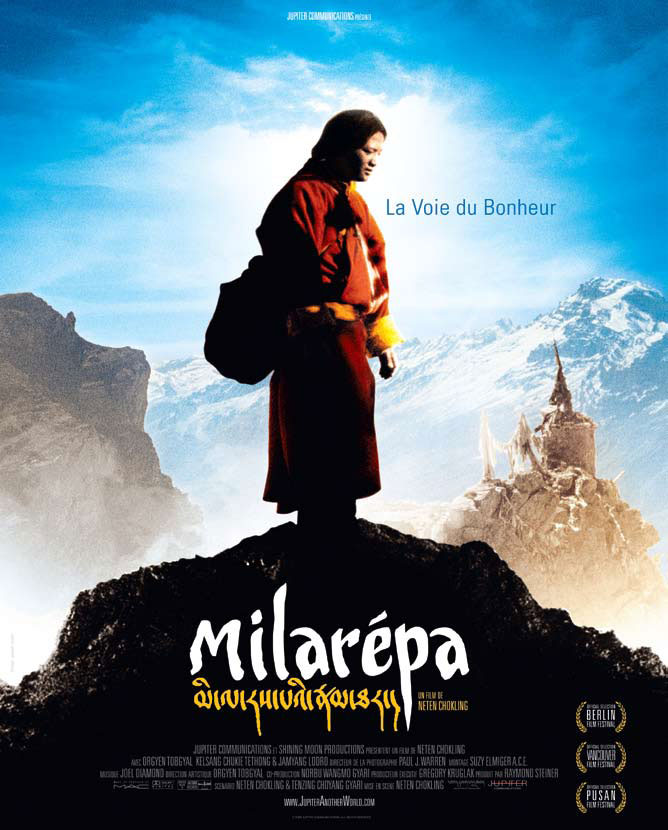
Milarepa Movie 2006

Milarepa is a tale of greed and vengeance - demons, magic, murder and redemption. It is the story of the man who became Tibet's greatest mystic.
A legendary tibetan story of revenge and redemption. A story of an ordinary boy Topaga who goes on to become Tibet's greatest saint Milarepa.

Director: Neten Chokling
Writers: Neten Chokling, Tenzing Choyang Gyari
Stars: Orgyen Tobgyal, Kelsang Chukie Tethtong, Jamyang Lodro | See full cast and crew


สำรอง / Substi

Rate it :

Travellers And Magicians (2003)

The two men embark on parallel, if separate, journeys. Their yearning is a common one--for a better and different life. Dondup, delayed by the timeless pace of his village, is forced to hitchhike through the beautiful wild countryside of Bhutan to reach his goal. He shares the road with a monk, an apple seller, a papermaker and his beautiful young daughter, Sonam. Throughout the journey, the perceptive yet mischievous monk relates the story of Tashi. It is a mystical fable of lust, jealousy and murder, that holds up a mirror to the restless Dondup, and his blossoming attraction to the innocent Sonam. The cataclysmic conclusion of the monk's tale leaves Dondup with a dilemma--is the grass truly greener on the other side? Written by Sujit R. Varma

Rate it :

Uthpalawanna: sinhala movie

Uthpalawanna Sinhala Movie

Sangeetha Weeraratne
Malani Fonseka
Roshan Ravindra 
Jagath Chamila
Chandani Senevirathna
Sandali Welikanna
Rohana Beddage

Director : Sunil Ariyarathna

Make-up Artists : Wasantha Wittachchi

Art Director :  Dharmasena Hemapala

Producer : Milina Sumathipala

Script : Tissa Abeysekara

Editor : Rangana Prasad


We could not play this video on your device. Please contact us for feedback.
สำรอง
Rate it :

LITTLE BUDDHA - FULL MOVIE

Lama Norbu comes to Seattle in search of the reincarnation of his dead teacher, Lama Dorje. His search leads him to young Jesse Conrad, Raju, a waif from Kathmandu, and an upper class Indian girl. Together, they journey to Bhutan where the three children must undergo a test to prove which is the true reincarnation. Interspersed with this, is the story of Siddharta, later known as the Buddha. It traces his spiritual journey from ignorance to true enlightenment.


Rate it :

SAMSARA

A young Tibetan monk is torn between his monastic life and the wife and child he loves. Tashi is a dedicated Buddhist monk, who has almost reached a state of enlightenment. Then he leaves the monastery to succumb to worldly temptations. After all, he reasons, Buddha also spent 29 years getting to know the temptations of life before he turned his back on them. Tashi goes from one extreme to the other. He wants to experience everything: sex, unfaithfulness, treachery, fatherhood, passion and misery. ........................... The film certainly makes the best of its setting, with stunning cinematography capturing the barren wastelands of Ladakh, a distant province of India wedged in between Tibet and Pakistan at an altitude of 15,000 feet above sea level.


Rate it :

Shudra The Rising 2012


Shudra is based on about 250 million people born Out Caste in Hindu Varna system. They were treated as Unclean & Impure, so much so that nobody ever even touched them or even allowed their shadow to fall on upper cast. They were called by the names of Chandaal, Antyaja, Black Caste, Harijan, Schedule caste & SHUDRA - THE UNTOUCHABLES.

An out caste Man 'Shudra' died for want of a sip of water, a child is publicity violated for uttering Holy Mantras, a pregnant woman is forced in the physical submission, a wounded man dies in need of medicine, all for one crime only... Born in the caste of 'Shudra-The Untouchable'.

It is believed that nature took ages to make man out of animal, but it took moments for certain men to make their fellow human animal again. They were named differently across the globe like -'BLACKS', 'RED INDIANS', 'DASYU', 'DAS'Chandala, Antyaja, Black Caste, Out Caste, Schedule Caste & 'Shudra- The Untouchable'.

'Shudra- The Rising' highlights the depth of evil human mind can succumb, to cling on to power and supremacy. 

A historical reminder of the danger of division and segregation, issues which are as relevant today as it was then.

Shudra: The Rising is a Hindi language film with a storyline based on the caste system in ancient India, and more specifically the Hindu Varna system. It is directed by Sanjiv Jaiswal and dedicated to Bhim Rao Ambedkar.

The film release was originally expected in February 2012, but was postponed to July 2012.

Plot

Shudra: The Rising is set in the time of the Harappan civilisation and has a storyline that concerns the caste system of ancient India.

The film depicts the four basic units of the caste system - the Brahmins, Kshatriyas, Vaishyas and the Shudras. The initial part narrates the invasion of the people of west Asia to India. They were of the Aryan race and they take over the local tribe and start controlling them. Finally a learned scholar, Manu Rishi, creates a caste system which classifies the local population as Shudras, who then suffer from cruel social rules. They are suppressed and exploited at every level of their lives by the upper caste people. The film shows various rules imposed on the Shudras such as waking with a bell around their ankles and a long leaf behind their back,and a pot hanging around their neck.


Rate it :

Nichiren to moko daishurai (Jap, 1958)

Legendary Buddhist monk Nichiren (Shintaro Katsu) returns from his studies to lead Japan out of moral crisis and prepare to fight the Mongol invaders during the 1200's by creating a new form of Buddhism. He runs afoul of the existing Buddhist sects and their government supporters and is persecuted. Can Nichiren persevere before the Mogol fleet reaches Japanese shores?

Nichiren to moko daishurai (Jap, 1958) "Nichiren e la grande invasione mongola" credo sia l'unico film su Nichiren. Ho deciso di sottotitolarlo in italiano facendo del mio meglio visto che non esisteva nella nostra lingua. Se avete bisogno del file dei sottotitoli ve li posso mandare a parte, basta che mi contattatehttp://www.facebook.com/chiaralovecat mail chiaracatch @ gmail.com . Buona visione fate sapere se vi è piaciuto!

Rate it :

Liaofan four lesson(chinese movie with English Dubbing)


Liao-Fan Yuan was born during Ming Dynasty, in about 1550, in Jiangsu Province, Wujiang County. Liao-Fan wrote a book, Liao-Fan's Four Lessons (了凡四訓), which were written originally to teach his son, Tian-Chi Yuan. The principal behind those lessons is that destiny can be changed through proper cultivation of kindness and humility. Thus one should not be bound by fate but by one's own action.

Liao-Fan was predicted by a wise monk, Mr. Kong that he would only live to the age of fifty-three and have no son. At first, he disregarded this wise monk's words as farcical nonsense, but then other things that Kong had predicted were rapidly coming true, which greatly disturbed him, but made him realize the force of destiny. He then proactively made an effort to rewrite his fate. In relating his own life experience in changing destiny, Liao-Fan, at the age of sixty-nine, wrote and taught these four lessons to his son.

The first lesson shows how to create destiny. The second lesson explains the ways to reform. The third reveals the ways to cultivate kindness and the fourth discloses the benefits of the virtue of humility.

This book, still in circulation after more than 500 years, is said to be the very basic foundation in learning Buddhism.


Rate it :

Zen | Life of Master Dogen (Eng sub) - 禅 (道元禅師)

道元禅師: http://ja.wikipedia.org/wiki/%E9%81%9...

Dōgen Zenji (道元禅師; also Dōgen Kigen 道元希玄, or Eihei Dōgen 永平道元, or Koso Joyo Daishi) (19 January 1200 -- 22 September 1253) was a Japanese Zen Buddhist teacher born in Kyōto. He founded the Sōtō school of Zen in Japan after travelling to China and training under Rujing, a master of the Chinese Caodong lineage.

Dōgen is known for his extensive writing including the Treasury of the Eye of the True Dharma or Shōbōgenzō, a collection of ninety-five fascicles concerning Buddhist practice and enlightenment.
http://en.wikipedia.org/wiki/D%C5%8Dgen
http://www.imdb.com/title/tt1156470

Eihei Dōgen (永平道元) también Dōgen Zenji (道元禅師) o Dōgen Kigen (道元希玄) o Koso Joyo Daishi (literalmente Gran Maestro) (19 de enero de 1200 -- 22 septiembre de 1253) fue un maestro budista japonés fundador de la escuela Sōtō del Zen en este país. Nacido en Kioto en el seno de una familia noble, quedó huérfano de padre y madre a muy temprana edad, siendo adoptado por uno de sus tíos. A los 13 años, entró como novicio en el Monte Hiei, centro de la escuela Tendaishū. En la primavera de 1223 partió hacia China, regresando a Japón en 1227 tras haber sido reconocido por el maestro Rujing como maestro de la escuela Cáodòng (曹洞宗, pronunciado Sōtō-shū en Japonés).

Tras su regreso, desarrolló su actividad religiosa en templos cercanos a Kioto, reuniendo a su alrededor una comunidad de seguidores de la nueva escuela del Budismo Zen. En 1243, se trasladó con ellos a Echizen, en la actual prefectura de Fukui. En esta región, fundó el templo Eihei-ji (永平寺), que se mantiene hasta la actualidad como uno de los dos templos principales de la escuela Sōtō.
http://es.wikipedia.org/wiki/D%C5%8Dgen

Rate it :

The Cup (1999 film)

The Cup (Phörpa) is a 1999 film directed by Khyentse Norbu. The plot involves two young football-crazed Tibetan refugee novice monks in a remote Himalayan monastery in India who desperately try to obtain a television for the monastery to watch the 1998 World Cup final.

The movie was entirely shot in the Tibetan refugee village Bir in India (Himachal Pradesh) (almost entirely between Chokling Gompa and Elu Road).

Producer Jeremy Thomas had developed a relationship with Norbu when he was an advisor on Bertolucci's Little Buddha.  Thomas later remembered his experience making the film:

The director Khyentse Norbu is a Tibetan Lama who went to NYC film school, who wanted to make a movie, and I had become friendly with him. There was this charming story, which was a teaching for him but a story for everyone else, about little monks and the World Cup. It was shown in Director’s Fortnight at Cannes, and we brought a lot of the Tibetans to the screening and it was well received and sold all over the world. It was a very happy story for everybody involved.

Release
The Cup was released to DVD on November 13, 2007 in North America by Festival Media (IBFF). The DVD was mastered from a new direct-to-digital transfer from the original film, and includes a bonus documentary entitled Inside The Cup, featuring the director discussing the film, cinema in general and Buddhist philosophy, along with outtakes from the film. There is also a director's commentary audio track.


Rate it :

โอวาทสี่ของ ท่านเหลี่ยวฝาน Liao Fan four lessons (ไทย)

ประวัติท่านเหลี่ยวฝาน 


ท่านเหลี่ยวฝานเป็นชาวเจียงหนาน (กังหนำ) 
อายุ ๔๓๓ ปีในปีนี้ หากท่านยังมีชีวิตอยู่ 
ท่านสอบจิ้นซื่อได้ และเข้ารับราชการเมื่ออายุ ๓๗ ปี 
คนสมัยก่อน มีเวลาร่ำเรียนมากกว่าพวกเราสมัยนี้ 
ท่านจึงมีความรู้กว้างขวาง ลึกซึ้งยิ่งนัก 
เชี่ยวชาญในวิชาการเกือบทุกแขนง 
นอกจากพุทธธรรมที่ท่านสนใจมาก 
จนสามารถเข้าถึงพระพุทธศาสนาอย่างถ่องแท้แล้ว 
ท่านยังเป็นนักปราชญ์ ในทางอักษรศาสตร์ 
โบราณคดี คณิตศาสตร์ ดาราศาสตร์ 
โหราศาสตร์ ไสยศาสตร์ เกษตรศาสตร์ 
อุทกศาสตร์ ธรณีวิทยา นิติศาสตร์ 
รัฐศาสตร์ ปรัชญา ฯลฯ 
แม้ยุทธศาสตร์ ท่านก็ช่ำชอง 
สามารถใช้ปัญญาเอาชนะโจรสลัดญี่ปุ่น 
ที่โจมตีท่าน ในขณะปฏิบัติการทางทหารที่ชายแดน 
ได้อย่างงดงาม ตำแหน่ง หน้าที่ราชการของท่านนั้น 
ดำรงทั้งฝ่ายบุ๋นและฝ่ายบู๊ 
ซึ่งน้อยคนนัก จักมีความสามารถเช่นนี้ 


Rate it :

Tagmor อรหันต์ตั๊กม้อ (Thai)


พระโพธิธรรม (สันสกฤต: โพธิธรฺม, เทวนาครี बोधिधर्म; อักษรโรมัน (NLAC) : bōdhidharma; จีน: 菩提達摩, พินอิน: Pútídámó , Dámó) แต่ในนิยายกำลังภายในในประเทศไทยมักเรียก ตักม้อ หรือ ตั๊กม้อ (สำเนียงแต้จิ๋ว ตรงกับจีนกลางว่า ต๋าหมอ)เป็นพระภิกษุในศาสนาพุทธฝ่ายมหายานนิกายเซน มีประวัติไม่ชัดเจนนัก แต่เชื่อกันว่ามีตัวตนอยู่จริง และเป็นผู้สถาปนาวัดเส้าหลิน ในจีน ทั้งยังได้เผยแพร่วิชามวยจีนในหมู่พระเณรของวัดเส้าหลิน จนมีชื่อเสียงมาจวบจนทุกวันนี้
ตามตำนานระบุว่า ท่านเกิดเมื่อราว ค.ศ. 520 เดิมเป็นพระราชโอรสองค์ที่ 3 ของพระเจ้าแผ่นดิน แคว้นคันธารราษฎร์ ประเทศอินเดีย ใกล้เมืองมัทราสในปัจจุบัน มีนัยน์ตาสีฟ้า ตั้งแต่พระชนอายุยังเยาว์ ทรงปราดเปรื่องและแตกฉานในคัมภีร์ของทุก ๆ ศาสนา ตลอดจนวรรณคดี อักษรศาสตร์โบราณ นับเป็นปราชญ์เอกแห่งยุค
เมื่อพระบิดาสิ้นพระชนม์ พระองค์สามารถนั่งสมาธิเข้าฌานสมาบัติชั้นสูง อยู่เบื้องพระบรมศพของพระบิดานานตลอดถึง 7 วัน หลังจากนั้น จึงไปศึกษาแสวงธรรมอยู่กับพระปรัชญาตาระเถระ ผู้เป็นพระสังฆปรินายกองค์ที่ 27 แห่งนิกายเซน (ซึ่งอ้างว่าสืบมาตั้งแต่พระมหากัสสปะในสมัยพุทธกาล ถือเป็นพระปฐมสังฆปริณายกของนิกายเซนในประเทศจีน) หลังจากนั้นท่านได้จาริกจากอินเดียไปเมืองจีน เมื่อราว ค.ศ. 526 (6 ขวบ?) ได้เดินทางไปยังเมืองกวางตุ้งของจีน เข้าเฝ้าจักรพรรดิอู่ตี้ และไม่นานต่อมาได้ก่อตั้งอารามขึ้นในเมืองลั่วหยาง และใช้เวลาปฏิบัติวิปัสนากรรมฐานถึง 9 ปีในการเพ่งผนังถ้ำ
ฝ่ายมหายาน ถือว่าพระโพธิธรรมเป็นสังฆปริณายกองค์ที่ 28 ที่สืบสายโดยตรงมาจากพระโคตมพุทธเจ้าผ่านทางพระมหากัสสปะ และยังเป็นผู้สถาปนานิกายเซนขึ้นมาในประเทศจีนอีกด้วย เนื่องจากคำสอนของท่านจะเน้นไปที่การเข้าฌาน แนวทางคำสอนของท่านจึงมักจะเรียกกันว่า ฌาน (สันสกฤต: [ธฺยาน] ध्यान : dhyan ) ในภาษาจีนเรียกว่า 'ฉาน'(สำเนียงจีนกลาง ส่วนสำเนีงแต้จิ๋วเรียกว่า เซี้ยง) และภาษาญี่ปุ่นว่า 'เซน'
ประวัติชีวิตของท่านถือเป็นตำนาน ขาดหลักฐานที่แน่นอน เช่น ตำนานหนึ่งเล่าว่า ท่านได้ตัดหนังตาทิ้ง เนื่องจากโมโหที่เผลอหลับไปขณะทำสมาธิ เมื่อหนังตานั้นตกถึงพื้น ก็เติบโตกลายเป็นต้นชา และตำนานยังเล่าต่อว่า ด้วยเหตุดังกล่าวภิกษุนิกายเซนจึงนิยมดื่มน้ำชา เพราะจะได้ไม่ง่วงเวลาทำสมาธิ
พ.ศ. 1079 มีการสร้างสถูปอุทิศถวายท่านขึ้นในเมืองเหอหนาน ภายหลังรัชสมัยจักรพรรดิถังไท่จง
ตุ๊กตาล้มลุกของญี่ปุ่น ที่เรียกว่า "ดะรุมะ" ก็เชื่อกันว่าสืบมาจากท่านตั๊กม้อนี้
Rate it :

Wei Lang เว่ยหล่าง (ฮุยเหนิง) พากษ์ไทย

พระฮุ่ยเหนิง (慧能) หรือ "เว่ยหลาง" เป็นภิกษุที่มีชีวิตสมัยราชวงศ์ถัง เป็นสังฆปรินายกองค์ที่ 6 ในนิกายฌานนับจากพระโพธิธรรม หลังจากสืบทอดบาตรจีวรและธรรมจากพระสังฆปริณายกองค์ก่อน คือ หวางยั่น(ฮ่งยิ้ม) เป็นพระสังฆปริณายกแห่งนิกายเซนองค์ที่ 5 เจ้าอาวาสวัดตุงซั่น
เว่ยหล่างมักถูกนำไปอ้างถึงในลัทธิอนุตตรธรรมว่าเป็นบรรพจารย์แห่งอนุตตรธรรมด้วย ลัทธินี้กล่าวว่ามีคำสอนเล้นลับเผยแพร่ได้เฉพาะโองการสวรรค์ โดยสืบต่อกันจากจิตถึงจิต เป็นการเฉพาะตัว รับช่วงต่อได้ทีละหนึ่งคนจากวิสุทธิอาจารย์ และจะเผยแพร่ต่อสาธารณชนทั่วไปไม่ได้ จนกระทั่งปัจจุบันจึงถึงยุคที่เผยแพร่ให้ประชาชนทั่วไปได้ศึกษา ซึ่งขัดกับหลักคำสอนของเว่ยหล่าง ในหมวดคำสอนครั้งสุดท้ายของท่าน ใจความว่า
"สำหรับคำสอนของฉันทั้งหมด นับแต่ได้กล่าวเทศนาในวัดไทฟันตราบจนบัดนี้ จงคัดลอกเป็นเล่มแล้วแจกจ่ายกันไปก็ได้ แต่ให้ชื่อว่า สูตรอันประกาศบนมหาบัลลังก์แห่งธรรมรถ จงทะนุถนอม ไว้ให้ดี แล้วมอบต่อกันไปตามอนุชนแต่ละรุ่น เพื่อช่วยเหลือสัตว์ทั้งปวง บุคคลที่สั่งสอนตามคำสอนนี้ เป็นผู้ที่สั่งสอนตามธรรมแท้ พอแล้วสำหรับธรรม ส่วนการรับช่วงจีวรนั้น ถือว่าเป็นการสิ้นสุดกัน เพราะเหตุใดหรือ? เพราะว่าท่านทั้งหลายต่างก็ศรัทธาต่อคำสอนของฉันโดยพร้อมมูล ทั้งท่านก็ปราศจากความเคลือบแคลงสงสัยใดๆ แล้ว ท่านย่อมสามารถสืบต่อจุดประสงค์อันสูงยิ่งของสำนักเราให้ลุล่วงไปได้ นอกจากนั้นตามความหมายในโศลกของท่านโพธิธรรม พระสังฆปริณายกองค์แรกผู้ถ่ายทอดพระธรรมและบาตรจีวรท่านก็ไม่ประสงค์จะให้มอบแก่ใครต่อไปอีก โศลกนั้นคือ:-
จุดประสงค์ในการมาดินแดนนี้ ก็เพื่อถ่ายทอดพระธรรม สำหรับปลดปล่อยสัตว์ที่ถูกครอบงำไว้ ด้วยความหลงผิด เมื่อมีกลีบครบห้ากลีบ ดอกไม้นั้นก็สมบูรณ์ หลังจากนั้นไป ผลจะปรากฏขึ้นเองตามธรรมชาติ"
และเมื่อมีคำถามในเรื่องการถ่ายทอดธรรมอันเล้นลับที่ว่าไม่มีการเผยแพร่ต่อสาธารณชนตามที่อนุตรธรรมกล่าวอ้าง ก็ได้กล่าวถึงในที่ประชุมก่อนเว่ยหล่างมรณภาพเช่นกัน ใจความว่า
ที่ประชุมถามว่า "ใครครับ พระคุณท่าน ที่ท่านได้ถ่ายทอดขุมกำเนิดแห่งดวงตาของธรรมแท้?" พระสังฆปริณายกตอบว่า "มนุษย์ในหลักธรรมย่อมได้รับ และบรรดาผู้ซึ่งหลุดพ้นแล้วจากความคิดเห็นอันเฉียบขาด ย่อมเข้าใจ"
ซึ่งจะเห็นได้ว่าธรรมนั้นมิใช่สิ่งเล้นรับอันใดเลย

Rate it :

Hi Dharma หลวงพี่ป่วนดวลเจ้าพ่อเปิ่น (พากย์ไทย)

กุฏิสะท้าน วิหารสะเทือน เมื่อก๊วนยากูซ่ามาเยือนอย่างไม่ได้รับเชิญ จนร้อนถึงพระลูกวัดต้องสบัดจีวรออกพิทักษ์ธรณีสงฆ์ หลังจากพ่ายแพ้ในสงครามระหว่างแก๊ง Jae-gyu และ 4 ลุกสมุนต้องหลบลี้หนีตายเข้าป่ากระเซอะกระเซิงมาเจอวัดแห่งหนึ่ง กลุ่มพระที่เคร่งครัดปฏิบัติกิจสงฆ์อย่างสงบ อนุญาตให้พวกเขาพักอยู่ได้เพียง 7 วัน แต่กว่า 7 วันผ่านไป Jae-gyu ก็ไม่เห็นว่าปลอดภัยนักที่จะออกไป ดังนั้นสงครามครั้งใหม่ระหว่างก๊วนนักบวชและแก๊งนักเลงจึงเกิดขึ้น มีการทดสอบความแข็งแกร่งและสติปัญญาเพื่อตัดสินว่าใครจะไป และแล้วการแข่งขันอันน่าอลวนก็เริ่มขึ้น


Rate it :
 
Batterfly . Powered by Blogger.
TOP
Copyright © 2014. Buddhist Films - All Rights Reserved
Template Created by ThemeXpose | Distributed By Blogger Template